

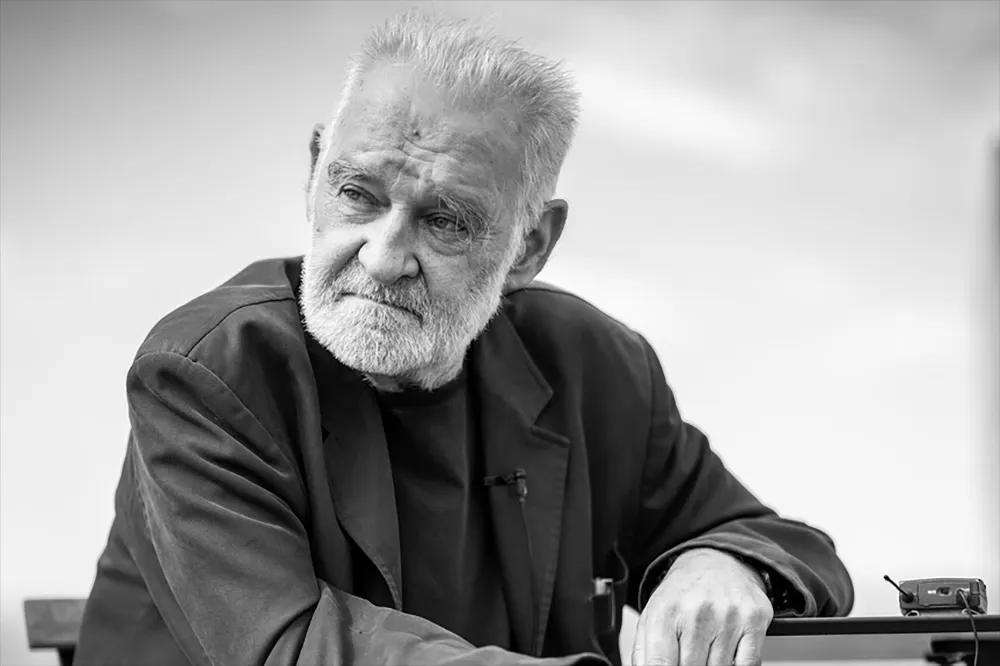
Renowned Hungarian director Béla Tarr, a pioneering figure in arthouse and slow cinema, has died at the age of 70 after a long and serious illness, the Hungarian Filmmakers’ Association and European Film Academy confirmed on January 6, 2026. His passing marks the end of one of the most influential artistic voices in international cinema.
A Career That Redefined Cinema
Béla Tarr was widely regarded as a trailblazer in the slow cinema movement, a style characterised by long unbroken takes, stark black-and-white visuals, and deliberate pacing that challenged conventional narrative techniques. Born in 1955 in Pécs, Hungary, Tarr made his directorial debut with Family Nest (1979) and went on to direct nine feature films over a career spanning more than four decades.
Some of his most celebrated works include:
- Sátántangó (1994) — a 439-minute epic often cited as one of the defining films of world cinema
- Werckmeister Harmonies (2000) — a haunting philosophical exploration of societal collapse
- The Turin Horse (2011) — his final feature, which won the Silver Bear Jury Grand Prize at the Berlin International Film Festival and serves as a meditative reflection on human existence Wikipedia
Tarr’s adaptation of László Krasznahorkai’s novels — including Sátántangó and Werckmeister Harmonies — brought the Nobel-winning author’s dense, existential prose to the screen, creating some of the most unforgettable cinematic experiences of the late 20th and early 21st centuries. Wikipedia
A Global Influence
Tarr’s work left a lasting mark on filmmakers and cinephiles worldwide. His aesthetic — long takes capturing atmospheric reality, minimal dialogue, and bleak landscapes — influenced major directors including Gus Van Sant and Jim Jarmusch, and helped define a generation of arthouse film language.
Beyond filmmaking, Tarr was committed to education and mentorship. After retiring from directing features following The Turin Horse, he founded the film.factory academy in Sarajevo, where he guided and taught emerging filmmakers.
Awards and Legacy
Tarr received numerous honours for his contributions to cinema, including lifetime achievement awards and international recognition at prestigious film festivals. In 2023, he was honoured with the European Film Academy’s Honorary Award, cementing his legacy as one of Europe’s most visionary auteurs.
Artistic and Political Voice
Known for his artistic integrity, Tarr’s films did more than tell stories — they presented ponderous reflections on existence, society, and power. His bleak yet poetic imagery explored human isolation, social decay, and existential despair, often in the context of post-Soviet Eastern Europe.
Tarr also maintained a politically outspoken voice, publicly opposing rising nationalism and advocating for the arts, frequently aligning himself with cultural movements that defended artistic freedom in Hungary and beyond.
A Quiet Farewell to a Cinematic Legend
Though Béla Tarr made his final film more than a decade ago, his influence continues through his films and the generations of filmmakers he inspired. The cinematic landscape feels a little quieter now with his passing, but his legacy — from Sátántangó’s hypnotic exploration of community to Werckmeister Harmonies’ philosophical depth — endures as a testament to the enduring power of cinema.
Final Take
Béla Tarr was more than a director — he was an architect of mood, a champion of thoughtful pacing, and a defining voice in global cinema. His death at 70 closes a monumental chapter in film history, but his visionary films and stylistic innovations will continue to resonate with audiences and creators for generations.

