

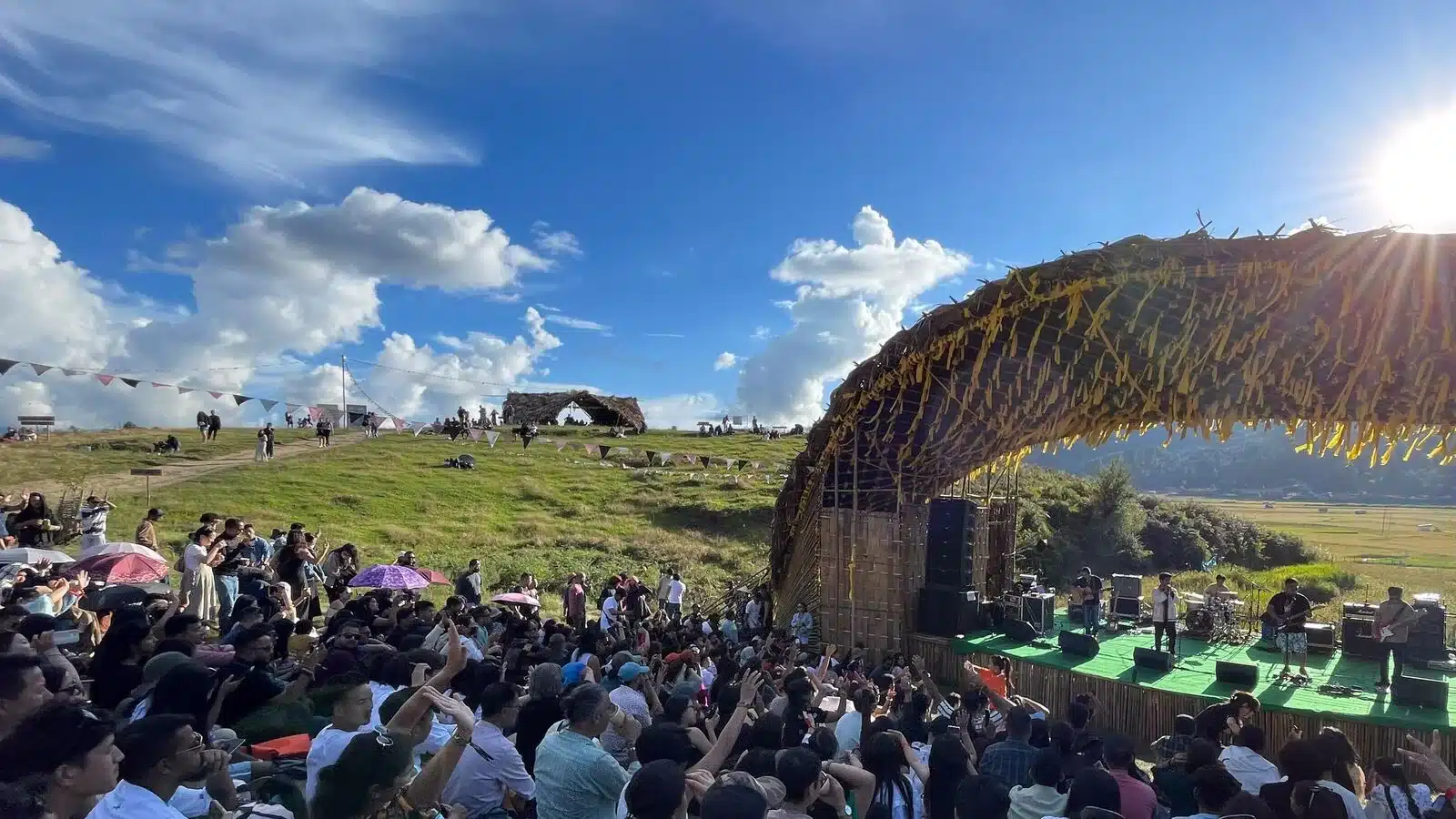
Nestled at about 5,500 ft in the pine rimmed rice paddies of Ziro Valley, a four-day festival every September has quietly remade how India thinks about live music: low on plastic, high on heart, and allergic to gatekeeping. It’s intimate but global, rooted in Apatani community life yet fiercely curious about sonic outsiders, a recipe that’s turned Ziro from a cult secret into a pilgrimage for indie heads. It began as a local idea in 2012, put together by event-maker Bobby Hano and guitarist Anup Kutty (of Menwhopause) to put northeast artists on the same map as India’s metro scenes. No one planned a blockbuster; they planned a conversation between musicians, the Apatani hosts and anyone willing to walk a few muddy fields for a good set. That humble beginning explains why the festival still feels like a house party that learned to scale without selling its soul.
The first thing you notice, walking into the festival, are the stages: bamboo structures, handcrafted, grown seemingly out of the earth rather than dropped from the sponsor’s checklist. Ziro’s organizers lean hard into low impact production, locally sourced materials, community labor, and a no-VIP egalitarian layout that keeps audience and performers on the same slope of grass.That’s an aesthetic choice and an ethical one, too; the festival brands itself as eco-friendly, and the staging is its billboard. It’s not perfect: Logistics in a remote valley bring real trade-offs-limited water, connectivity, waste-management challenges, and the constant need to balance tourism with cultural integrity. Still, the festival model and the messaging-pushes other events in India at least to start asking how they’ll pack out the garbage.
Ziro’s lineup is a delicious mash: local Apatini and northeast bands rubbing shoulders with pan-Indian indie, electronic experimentalists, and sometimes one or two international acts. Over the years, the bill has included acts from Lithuania to Japan and veterans from the global rock underground. The result: you’ll go for an acoustic set at noon and accidentally discover a band that rewires your playlist for months. Artists come back because the crowd listens. There’s no manic festival rush to the next stage; people lie on the grass and actually hear the music. As singer-songwriter Shantanu Pandit put it in festival materials, Ziro is “like a pilgrimage”-regulars return because the space rewards attention, not distraction.
Crucially, Ziro isn’t an outsider festival landed on a village. The Apatani people host and participate: their rice-farming traditions, rituals, and hospitality are intertwined within the festival model. The valley itself is a living cultural landscape: rice terraces, wet paddy practices, and festivals like Dree speak to a deep local rhythm that this festival has chosen to respect rather than overwrite.That relationship is delicate, and organizers of festivals have said time and again that community inclusion is central to the DNA of the event. The villagers benefit economically-local homestays, food, labor-but the conversations are ongoing: how to channel tourism incomes sustainably, how to keep the culture from being diluted, and if scale can be handled by the fragile ecology of the valley. Ziro is often cited as a case study for community-led cultural tourism because the benefits and the tensions are both visible on its front lawn.
Getting to Ziro is part of the ritual. The nearest significant air entry point is Guwahati, followed by a scenic and long drive up into Arunachal. Indian visitors need an Inner Line Permit-the bureaucratic speed-bump that slows the hustle and keeps the crowd a little more intentional. Accommodations range from rugged campsites to homestays; bring layers, cash, and humility. No festival is above criticism. As it grows bigger, the questions start piling up: will the Apatani be able to retain their agency as tourism grows? Will ecological costs inch in? Is it possible to curate authenticity without performing the tribe for visitors? So far, the organisers’ answer has been to keep local labour and decision-making at the centre, but success in the long run depends on negotiation, not sloganeering.
Ziro matters because it proposes a different grammar for the festival: small footprint, big listening, community stewardship. It proves you can make a festival that’s an international cultural exchange and a local economic engine – provided you are willing to share power, be messy and keep the valley’s needs ahead of brand deals. For India’s festival scene, that’s the real headline.

