

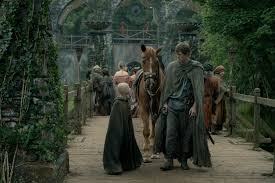
A Knight of the Seven Kingdoms has officially been released, marking HBO’s latest return to the Game of Thrones universe — but this time with a very different tone, scale, and intention. Based on George R. R. Martin’s Dunk and Egg novellas, the series shifts focus from sprawling wars and dragons to character-driven storytelling set decades before Game of Thrones.
A New Chapter in the Game of Thrones Universe
Set nearly 100 years before the events of Game of Thrones, A Knight of the Seven Kingdoms follows the journey of Ser Duncan the Tall (Dunk) and his young squire Egg, who later grows up to become King Aegon V Targaryen. Instead of palace conspiracies and world-ending threats, the show zeroes in on honour, loyalty, class divide, and personal morality.
This creative pivot has been deliberate. HBO positioned the series as a grounded counterpoint to the epic scale of House of the Dragon, aiming to explore Westeros through the eyes of ordinary people rather than rulers and dragons.
What Makes This Release Different
Unlike previous entries in the franchise, A Knight of the Seven Kingdoms:
- Focuses on intimate storytelling over spectacle
- Centres around knighthood and ethics, not power grabs
- Leans into warmth, humour, and companionship
- Adapts one of George R. R. Martin’s most beloved character pairings
Early viewers have noted that the series feels closer in spirit to a medieval road story than a political fantasy epic — a conscious stylistic choice that sets it apart from earlier shows.
Cast, Tone, and Visual Style
The show stars Peter Claffey as Dunk and Dexter Sol Ansell as Egg, with performances that prioritise restraint and emotional realism. Visually, the series adopts a simpler, lived-in aesthetic — dusty roads, modest armour, and everyday villages — reinforcing the idea that this is a story about people on the margins of history, not those who write it.
HBO’s production design and costuming lean away from grandeur, instead emphasising authentic medieval textures and grounded environments.
Why This Release Matters for the Franchise
The release of A Knight of the Seven Kingdoms signals a strategic evolution of the Game of Thrones franchise. After years of escalation — bigger wars, bigger dragons, higher stakes — HBO is testing whether audiences are ready for:
- Smaller stories with emotional depth
- Slower pacing rooted in character growth
- A more literary, less explosive adaptation style
If successful, the series could open the door for more focused spin-offs set across different corners of Westeros.
Audience Reception So Far
Initial reactions suggest that the show is being appreciated for its quiet confidence rather than shock value. Long-time fans of George R. R. Martin’s books, in particular, have praised the adaptation for capturing the heart and philosophy of the original novellas instead of inflating them into spectacle.
Final Take
A Knight of the Seven Kingdoms doesn’t try to outdo Game of Thrones — and that’s exactly its strength. With its release, HBO has delivered a series that understands that Westeros isn’t just built on wars and crowns, but on ordinary people trying to live with honour in a brutal world. Whether this softer, character-first approach becomes the future of the franchise now depends on how audiences embrace it.

